

Description
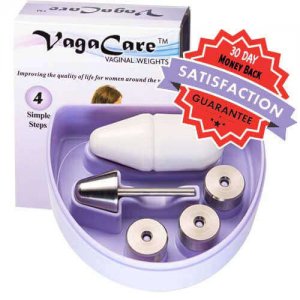
VagaCare® Vaginal Cones Exercise System.
Designed by Physicians and Therapist (often called kegel cones) aid women in practicing kegel exercises. These type of cones come in different sizes for pelvic comfort. Insert with ease and removed by a small string. Contractions become natural after insertion.
First of all, building muscle strength is important. Therefore, the easiest way is vaginal weights. However, women know of kegel exercises, but few practice them regularly. Meanwhile, lady’s have trouble locating muscles to focus on. They struggle to maintain the repetition for optimal benefits. This system guides your performance while kegel exercising.
Four Easy Gravity Steps To Muscle Strengthening
Vaginal cones are user-friendly. Other products are bulky and difficult to use, making it difficult to place correctly. Specially designed to fit correctly. Simple instructions and easy to follow. Inserted as effortlessly as a tampon. Interchangeable vaginal weights for strengthening and muscle tone. Following, achievements by heavier weights after mastering the lighter weights.
Customers love…
the flexibility of the this system. Used anywhere at anytime. Whenever, working indoors or jogging. No need to take time away from your busy schedule. Vaginal cones can be used with even the most serious cases of muscle weakness. Most of all, those with severe issues can begin using the exerciser lying down. After, just weeks, most can hold the vaginal cones in place standing up. Soon after that, the exercises become less of a daily struggle.
Lady’s of all ages will benefit. Your sex life can improve with stronger muscles. And yet, effectively training the pelvic floor with ease. Now, don’t overlook the benefits. Once, you start, you’ll see the difference. After all, women love the simplicity when using vaginal cones. In the long run, you’ll thank yourself. Not to mention, your partner will also thank you. Furthermore, don’t delay a healthier inner core. For the most part, you have nothing to lose and everything to gain. A few days a week is all it takes.
All you need is to place an order. This will but you one step ahead of inner strength. Start kegel exercising with the proper system. Ask your mother has she ever leaked urine? I’ll bet she says yes. Leakage doesn’t have to take control of you. You now have the opportunity to be in control. Order your set of vaginal cones today! Offering a (100% 30 Day Money Back Guarantee).
Finally, combined expert knowledge with innovative technology. A creative new assisted exercise program using vaginal cones. Designed for your privacy, Physicians recommended.

Julie –
No hassle at all. This is the easiest product to use when it comes to tightening. Started using these cones in 2012 and haven’t stop. I workout with them four days a week and keeps that area in shape. My husband says don’t ever stop. Ha! Ha!
Cassidy –
Bought this product over three years ago and it’s helped me with urination issues. I like this system because you can use it anywhere at anytime. Real easy to use. My string broke one day and I contacted them about it and within a few days had a new string. No cost to me at all. They paid for the shipping as well. Great customer service.
Cindy –
Just a quick review while on vacation. I was leaking urine for many years after childbirth and kept looking for a solution and came across these weights after speaking with my OB/GYN. She recommended these weights over some other products I asked about. I can say they have made a big difference in controlling my urination. Thanks VagaCare
Katherine –
I love this system. Easy to use and great for traveling. My job requires traveling three times a month and I always take my Vagacare cones with me. The least intimidating product I’ve ever used.
Jarna –
Just bought this product four months ago. Had been putting it off for years. My leakage was getting much worse. Within that short of time, its made all the difference in the world. I felt I should come back and give it a 5 star. Lady’s, don’t put off using a product like this. You’ll thank yourself later.